Cooking oil plays a major role in everyday nutrition, yet many people question which option truly supports long term health. Research suggests that replacing saturated fats with healthier unsaturated fats may reduce heart disease risk by up to 30%. Meanwhile, the World Health Organization encourages limiting industrial trans fats because they contribute to hundreds of thousands of deaths annually. Against this background, Algae Cooking Club Oil has gained attention as a modern alternative. Its unique production method, balanced fat profile, and culinary performance have sparked growing interest among home cooks and professional chefs.
What Is Algae Cooking Club Oil?
Algae Cooking Club is a food biotechnology company producing cooking oil from fermented microalgae instead of traditional crops. The company was co founded in 2023 by Kas Saidi through the venture studio Squared Circles. It launched publicly in early 2024 with a mission to offer a healthier and more sustainable cooking oil.
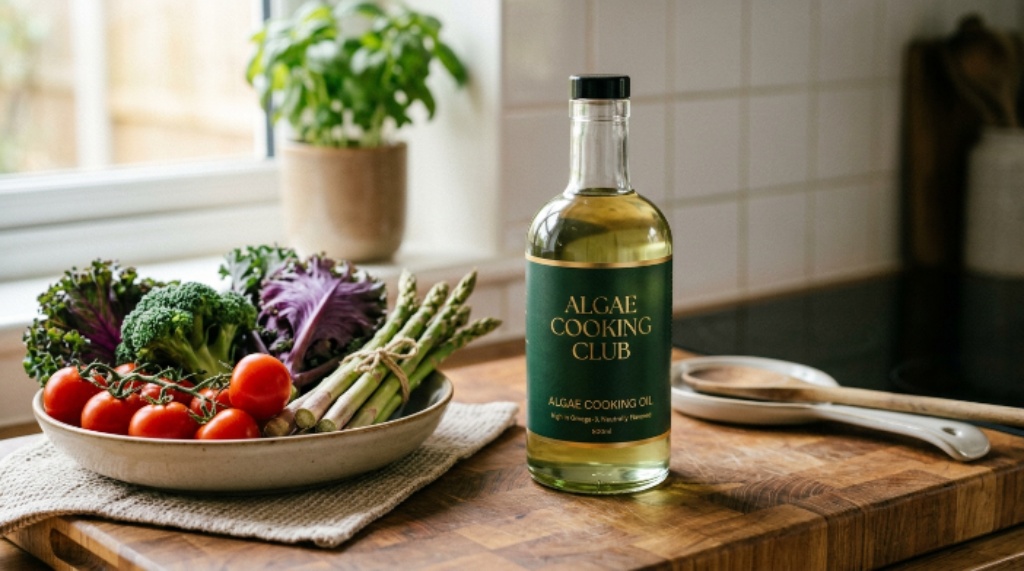
Unlike vegetable oils extracted from seeds, this oil comes from microscopic algae grown through controlled fermentation. The process creates a pure cooking oil without relying on farmland dedicated to oilseed crops. As a result, the product offers consistency while reducing environmental pressure.
The brand also gained recognition through support from Michelin starred chef Daniel Humm of Eleven Madison Park. Professional chefs appreciate its neutral flavour, stable performance, and versatility across many cooking styles.
How Is Algae Cooking Club Oil Made?
The manufacturing process differs greatly from conventional vegetable oil production. Scientists grow microalgae inside fermentation tanks under carefully managed conditions. Afterwards, the natural oils are separated, refined, and prepared for culinary use.
Because the algae grow through fermentation instead of sunlight in open ponds, production remains efficient and highly controlled. Manufacturers can maintain consistent quality throughout every batch. This approach also reduces exposure to environmental contaminants.
The process avoids the need for massive fields of oil producing crops. Consequently, it requires less agricultural land than many traditional edible oils. That feature contributes to the company’s sustainability goals.
Nutritional Profile of Algae Cooking Club Oil
One reason consumers notice this oil involves its balanced nutritional composition. The fat profile supports both cooking performance and dietary quality. Furthermore, its clean flavour makes it suitable for numerous recipes.
Typical nutritional highlights include:
- High levels of monounsaturated fat
- Low saturated fat content
- No industrial trans fats
- Neutral taste
- High heat stability
- Naturally cholesterol free
Monounsaturated fats are commonly associated with heart healthy eating patterns. Many nutrition experts recommend replacing excessive saturated fats with these healthier alternatives whenever practical.
Is Algae Cooking Club Oil Healthy?
The short answer is yes for most healthy adults. Its nutritional profile compares favourably with several popular cooking oils. However, overall health still depends on your complete dietary pattern.
Several characteristics support its healthy reputation. First, the oil contains predominantly monounsaturated fats, which many dietary guidelines encourage. Second, it remains stable during high temperature cooking, reducing the chance of excessive oxidation.
Additionally, the product contains no industrial trans fats. These harmful fats have been strongly linked to cardiovascular disease. Choosing oils without trans fats supports healthier everyday cooking.
Even healthy oils should remain part of a balanced diet. Moderation still matters because all cooking oils contain concentrated calories. Sensible portion sizes help maintain overall nutritional balance.
Comparing Algae Cooking Club Oil With Other Popular Oils
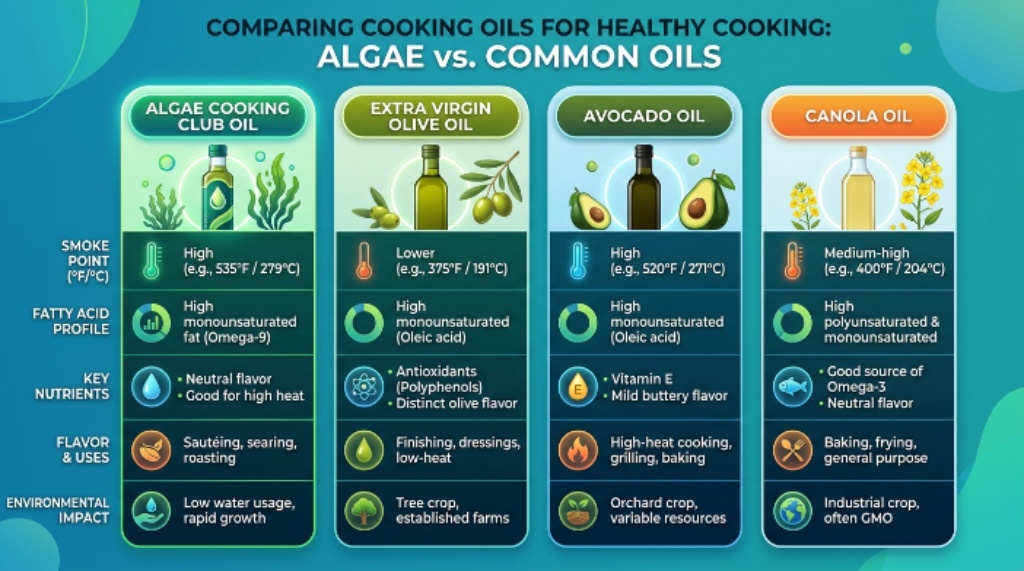
Choosing the right cooking oil becomes easier through direct comparison. Every oil offers different strengths depending on nutritional priorities and cooking methods.
| Cooking Oil | Main Fat Type | High Heat Cooking | Neutral Taste | Sustainability |
| Algae Cooking Club Oil | Monounsaturated | Excellent | Yes | Excellent |
| Olive Oil | Monounsaturated | Good | Mild | Good |
| Avocado Oil | Monounsaturated | Excellent | Mild | Good |
| Canola Oil | Monounsaturated | Good | Yes | Moderate |
| Sunflower Oil | Polyunsaturated | Good | Yes | Moderate |
| Coconut Oil | Saturated | Good | Distinct | Moderate |
Olive oil remains an excellent everyday choice, especially for salads and light cooking. However, some people prefer a completely neutral flavour for baking and frying.
Avocado oil also performs well under high temperatures. Nevertheless, algae based oil often offers a similar cooking experience with an even lighter taste profile.
Health Benefits of Algae Cooking Club Oil
Supports Heart Health
Monounsaturated fats have been extensively studied for cardiovascular benefits. Replacing unhealthy fats with healthier unsaturated fats may improve cholesterol balance. Therefore, this oil fits well into heart conscious meal planning.
Handles High Heat Well
Cooking oils break down differently under intense temperatures. Oils with greater stability produce fewer undesirable compounds during cooking. Consequently, algae oil performs effectively for frying, roasting, and sautéing.
Neutral Flavour Improves Versatility
Some healthy oils influence the flavour of finished dishes. In contrast, algae cooking oil allows ingredients to remain the centre of attention. This quality benefits both savoury meals and baked goods.
Suitable for Many Dietary Patterns
The oil fits naturally into several eating approaches. Examples include:
- Mediterranean inspired diets
- Plant based diets
- Vegetarian lifestyles
- Vegan meal plans
- Lower saturated fat diets
Its flexibility helps households simplify meal preparation without changing recipes significantly.
Environmental Benefits Beyond Nutrition
Health conscious consumers increasingly consider environmental impact alongside nutrition. Algae based oils present interesting advantages in this area. Their production requires fewer agricultural resources than many conventional oils.
Fermentation technology reduces dependence on large farming operations. Less land usage may help preserve natural ecosystems. Furthermore, production remains efficient throughout the year.
Reduced water demands also support sustainable manufacturing. These environmental advantages attract consumers seeking more responsible food choices.
Best Ways to Use Algae Cooking Club Oil
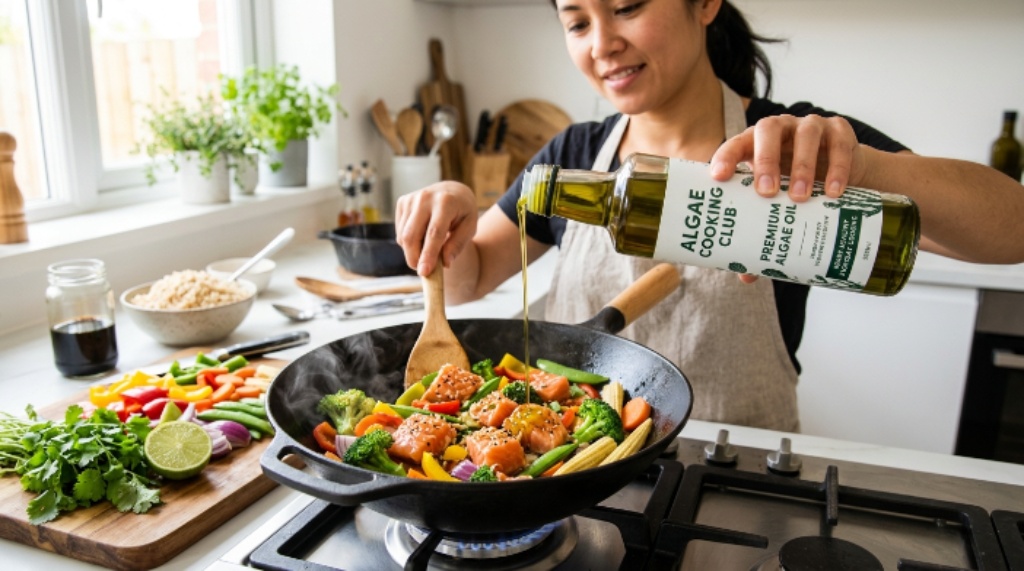
Its versatility makes this oil useful throughout the kitchen. Home cooks can replace many traditional cooking oils without major recipe adjustments. The neutral flavour supports countless dishes.
Popular uses include:
- Pan frying vegetables
- Stir frying meats
- Baking cakes
- Roasting potatoes
- Homemade salad dressings
- Grilling seafood
- Air fryer recipes
- Marinades
The oil adapts well because it does not overpower delicate ingredients. Instead, it allows herbs, spices, and fresh produce to shine naturally.
Who Should Consider Using This Oil?
Many households may benefit from switching to algae based cooking oil. However, personal preferences and dietary goals remain important factors. Individual needs always vary.
People who may appreciate this product include:
- Families reducing saturated fat intake
- Home cooks needing high heat performance
- Environmentally conscious consumers
- Plant based eaters
- Professional chefs
- Individuals preferring neutral tasting oils
Those with specific medical conditions should always discuss dietary changes with healthcare professionals. Personalised guidance remains the safest approach.
Are There Any Drawbacks?
No cooking oil suits every situation perfectly. Although algae cooking oil offers many strengths, consumers should understand possible limitations.
Availability remains more limited than traditional supermarket oils. Some shoppers may need to purchase it online. Distribution continues expanding as consumer demand increases.
Premium production methods may also result in higher pricing than conventional vegetable oils. Nevertheless, many buyers consider the nutritional and environmental benefits worthwhile.
Like every edible oil, excessive consumption adds unnecessary calories. Balanced portions remain essential within a healthy eating plan.
Tips for Buying High Quality Algae Cooking Oil
Choosing the right bottle helps maximise both quality and freshness. Reading labels carefully ensures you receive a genuine product.
Consider these shopping tips:
- Purchase from trusted retailers.
- Check the production date.
- Store away from direct sunlight.
- Seal tightly after each use.
- Follow recommended storage instructions.
Proper storage helps preserve flavour and cooking performance over time.
Should You Replace Your Current Cooking Oil?
Replacing cooking oil depends upon your cooking habits and nutritional priorities. Many households use different oils for different recipes. Variety often works well within balanced diets.
If you frequently cook at high temperatures, algae oil offers excellent stability. Likewise, people seeking a neutral flavour may enjoy its versatility. Meanwhile, sustainability minded shoppers often appreciate its innovative production.
You do not necessarily need to discard every existing oil immediately. Instead, gradually introducing algae cooking oil allows practical comparison within your own kitchen.
Conclusion
Algae Cooking Club Oil represents an innovative step forward in healthy cooking oils. Its high monounsaturated fat content, excellent heat stability, neutral flavour, and environmentally responsible production make it an attractive choice for modern kitchens. While no single food guarantees perfect health, this oil aligns well with balanced eating patterns supported by nutrition experts.
If you want a versatile cooking oil that supports both culinary performance and smarter nutrition, Algae Cooking Club Oil deserves serious consideration. Try incorporating it into your favourite recipes and evaluate how it fits your cooking style and long term wellness goals.
FAQs
Is Algae Cooking Club Oil healthier than vegetable oil?
Yes, it generally offers a healthier fat profile with higher monounsaturated fats and no industrial trans fats.
Can I fry foods with Algae Cooking Club Oil?
Yes, its high heat stability makes it suitable for frying, roasting, and sautéing.
Does algae cooking oil taste different?
No, it has a mild neutral flavour that does not overpower food.
Is Algae Cooking Club Oil suitable for vegans?
Yes, it comes entirely from fermented microalgae and contains no animal ingredients.
Is algae cooking oil environmentally friendly?
Yes, its fermentation based production uses fewer agricultural resources than many conventional cooking oils.