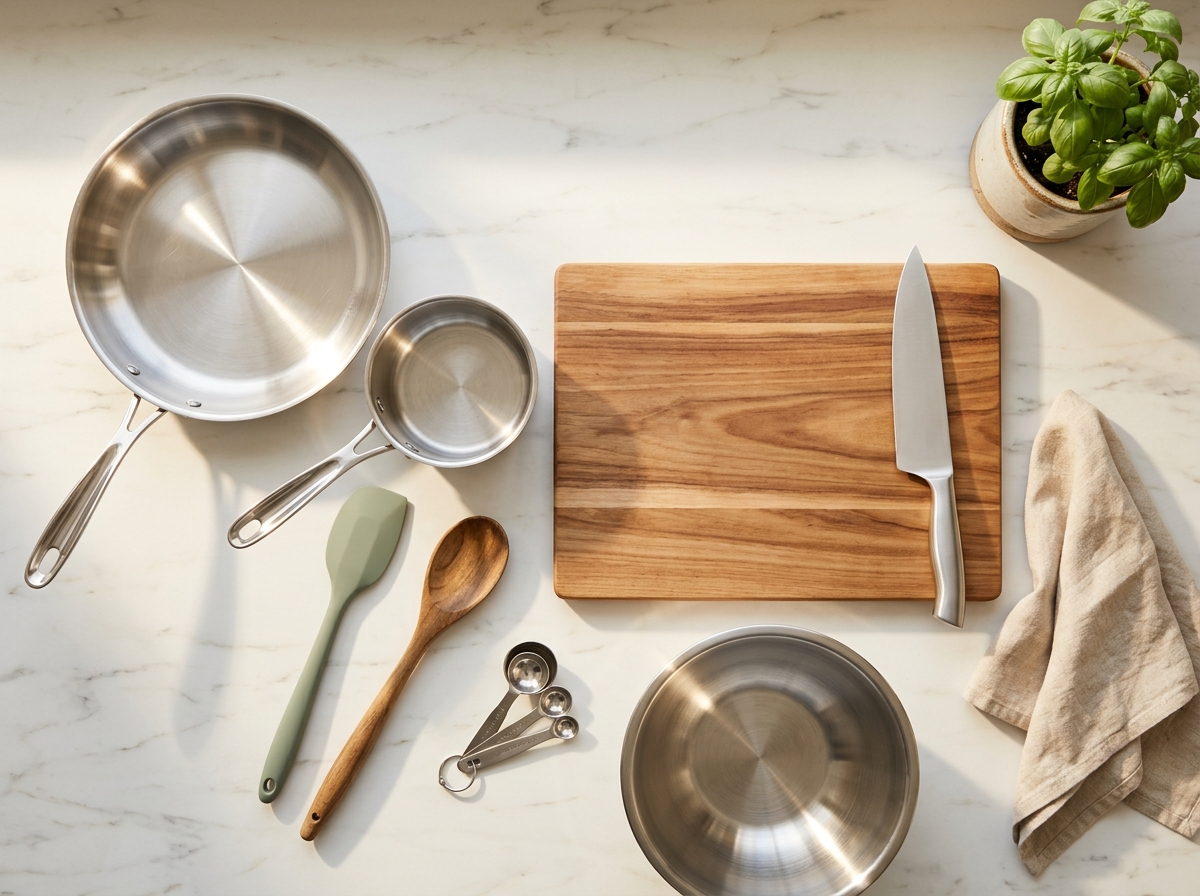
You finally decided to cook more at home. The kitchen looks clean, the fridge has actual food in it, and then you realize the hardest part: figuring out which tools you truly need versus which ones just collect dust. Over the last few years, one small instrument has quietly become the most valuable thing in beginner kitchens. Learning how to use kitchen thermometer //greatestjournal.com/food-and-fruits/how-to-use-meat-thermometer-correctly-for-perfect-cooking/ correctly takes less than five minutes, yet it prevents more ruined meals than any expensive pan you could buy. This guide skips the hype and focuses on the essentials that genuinely earn their counter space.
Quick Answer
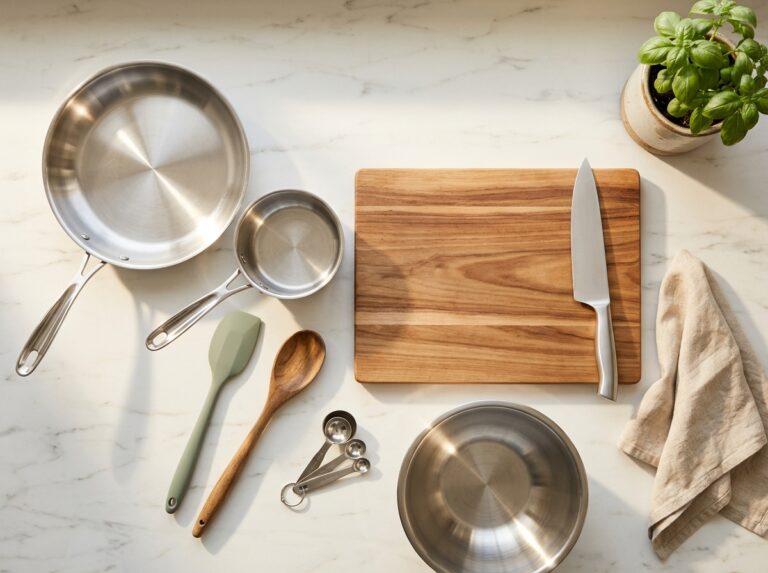
A beginner-friendly kitchen needs roughly ten tools: a digital instant-read thermometer, a chef’s knife, a cutting board, a skillet, a saucepan, a sheet pan, mixing bowls, measuring cups and spoons, a spatula, and a colander. Focus on reliability over quantity. One sharp knife and one accurate thermometer accomplish more than a full drawer of specialty gadgets you never touch.
Key Takeaways
- A digital instant-read thermometer is the single most useful check against both undercooked and overcooked food, especially meat and poultry.
- Buy fewer, better tools. A dull knife causes more frustration and injuries than a cheap one.
- You do not need every gadget marketed to beginners. Most recipes are covered by about ten core items.
- Accuracy matters more than brand. Learn the calibration check so your thermometer stays trustworthy.
- Add tools as specific cooking needs arise, not all at once before you start.
Why the Thermometer Belongs in Every Beginner Kitchen
A thermometer removes guesswork. Beginners often judge doneness by color or time, and both can mislead. Meat can look brown on the surface while the center is still undercooked, and cooking times vary based on thickness, starting temperature, and pan heat. An instant-read thermometer gives you a number, and numbers are easier to trust than intuition you have not built yet.
The practical payoff is twofold. You stop overcooking food out of fear, and you stop serving chicken that is still pink near the bone. If you are not sure how to check internal temperatures properly, the linked guide above walks through placement and timing in detail.
Digital vs. Dial Thermometers
For beginners, a digital instant-read thermometer is usually the better first choice. It reads in a few seconds, which matters when you are holding a hot pan. Dial thermometers can be accurate, but they are slower to respond, and the needle can get knocked out of calibration. A basic digital model often costs less than a single restaurant meal and does the job well.
The Core Knives and Cutting Tools
You can cook almost anything with one good chef’s knife. An eight-inch blade handles most chopping, slicing, and dicing tasks. Add a small paring knife for detail work like peeling fruit or trimming garlic. That is genuinely enough for most beginners.
A Word on Cutting Boards
Plastic boards are easy to clean and dishwasher-safe. Wooden boards are gentler on knife edges and can last for years if you oil them occasionally. Either works. Many cooks keep one large board for produce and a second for raw meat to reduce cross-contamination.
Knife Sharpening
A dull knife is more dangerous than a sharp one because it forces you to press harder and slip more easily. A simple handheld sharpener or a honing rod used regularly keeps the edge serviceable. You do not need professional sharpening as a beginner.
Cookware That Covers Most Recipes
| Tool | What It Handles | Beginner Tip |
|---|---|---|
| 10–12 inch skillet | Searing, eggs, sautéing | Stainless or cast iron both work; avoid thin pans that warp |
| 2–3 quart saucepan | Sauces, rice, boiling | A lid that fits snugly matters more than the brand |
| Rimmed sheet pan | Roasting vegetables, baking | Buy two; they are used constantly |
This trio covers the vast majority of weeknight cooking. Specialty pieces like a Dutch oven or grill pan are useful later, once you notice you keep wanting them.
Measuring, Mixing, and Handling
Dry measuring cups and spoons are non-negotiable for baking, where ratios matter more than in stovetop cooking. A liquid measuring cup with clear markings helps with sauces and stocks. Two or three mixing bowls in different sizes handle most tasks.
A silicone spatula, a wooden spoon, and a pair of tongs round out the basics. Tongs in particular are underestimated. They let you flip, toss, and grab food without burning your fingers, and they cost very little.
Common Beginner Mistakes With Kitchen Tools
- Buying a full gadget set. Most kits include tools you will use once or twice a year.
- Skipping the thermometer. This is the fastest way to cook meat inconsistently.
- Ignoring knife maintenance. A knife that never gets sharpened becomes a chore to use.
- Buying nonstick everything. Nonstick pans wear out quickly under high heat; one is enough.
- Waiting for the perfect kitchen. Start cooking with what you have and add as needed.
How to Prioritize Your Purchases
Start with the tools that solve immediate problems. If you plan to cook meat, buy the thermometer first. If you plan to cook mostly vegetables and grains, your knife and skillet matter more. Let your actual cooking habits guide the order.
A Simple Buying Order for Beginners
- Chef’s knife and cutting board
- Digital instant-read thermometer
- Skillet and saucepan
- Sheet pan and mixing bowls
- Measuring tools and spatula
- Tongs, colander, and storage containers
Many people reverse this order and buy the fun gadgets first. Reversing it usually means spending more money for less practical benefit in the first month of cooking.
Frequently Asked Questions
Do I really need a thermometer as a beginner?
Yes, if you cook meat. It prevents both undercooking and overcooking, which are the two most common beginner problems. It also helps with bread, custards, and oil temperature once you branch out.
How often should I check my thermometer’s accuracy?
Check it every few months, or anytime it has been dropped. The ice water test, where the reading should be near 32°F (0°C), is the simplest method and takes about a minute.
Is a cast iron skillet better than stainless steel for beginners?
Neither is universally better. Cast iron holds heat well and is inexpensive, but it needs seasoning and care. Stainless steel is more forgiving to clean but reacts more slowly to heat changes. Pick based on how much maintenance you want.
Can I start cooking with just a few tools?
Absolutely. A knife, cutting board, skillet, saucepan, and thermometer let you cook a surprising range of meals. Add tools as specific recipes call for them rather than stocking up in advance.
What is the most overrated beginner kitchen gadget?
It depends on the cook, but single-purpose electric gadgets that take up counter space and do one task often lose value quickly. A good knife and a thermometer rarely do.
Conclusion
A beginner-friendly kitchen is not about owning everything. It is about owning the right few things and knowing how to use them well. Start with a sharp knife, a solid pan, and a reliable digital thermometer, then build from there as your cooking habits reveal what you actually need. The thermometer in particular changes how confidently you cook, because it replaces anxiety with a reading you can act on.