Fresh basil adds bright flavor and aroma to pasta, salads, soups, and homemade sauces. However, basil leaves often turn black quickly when exposed to cold temperatures or moisture changes. According to food waste studies, herbs rank among the most commonly wasted kitchen ingredients in American homes. In addition, frozen herbs can lose up to 50% of their visual appeal when stored incorrectly. Learning how to freeze fresh basil without it turning black helps preserve flavor, color, and texture for months. With the right freezing methods, you can enjoy garden-fresh basil anytime while reducing waste and saving money.
Why Basil Turns Black During Freezing
Basil is a delicate herb with high water content and sensitive cell walls. When exposed to air or extreme cold, the leaves oxidize very quickly. As a result, the vibrant green color changes into dark brown or black patches. Proper preparation helps slow down this reaction and keeps the herb looking fresh longer.
Temperature shock also damages basil leaves during freezing. Unlike rosemary or thyme, basil reacts poorly to direct cold exposure without blanching or oil protection. Therefore, using the right freezing technique matters more than many people realize. Similar careful preservation methods are also important in food storage guides like how to grow passion fruit in pots, where environmental control affects freshness and quality.
Best Time To Freeze Fresh Basil
The ideal time to freeze basil is immediately after harvesting or buying it. Fresh leaves contain more essential oils and stronger flavor during the first few days. If basil starts wilting, freezing will not restore its texture or appearance. Always select bright green leaves without yellow spots or bruising.
Morning harvests usually produce the best basil for freezing because the leaves contain higher moisture levels. Garden-grown basil often tastes richer during summer when sunlight exposure increases oil production. Store-bought basil should be frozen within two days for the best results. Quick action prevents flavor loss and discoloration.
How To Prepare Basil Before Freezing
Wash The Leaves Carefully
Start by rinsing basil gently under cool water to remove dirt and insects. Avoid using strong water pressure because delicate leaves tear easily. After washing, place the basil on paper towels or a clean kitchen cloth. Let the leaves dry completely before moving to the next step.
Excess moisture creates ice crystals that damage basil during freezing. Therefore, drying the leaves thoroughly is one of the most important steps. A salad spinner can speed up the process without harming the herb. Proper drying also helps basil maintain a more vibrant appearance.
Remove Damaged Leaves
Check each leaf carefully before freezing. Remove blackened, yellow, or bruised leaves because they affect the quality of the batch. Healthy leaves freeze better and preserve more flavor. Consistent quality leads to better cooking results later.
Using only fresh basil improves storage life significantly. Damaged leaves release moisture and enzymes that encourage discoloration. In addition, weak leaves become mushy after thawing. Spending a few extra minutes sorting basil improves the final outcome.
How To Freeze Fresh Basil Without It Turning Black Using Blanching
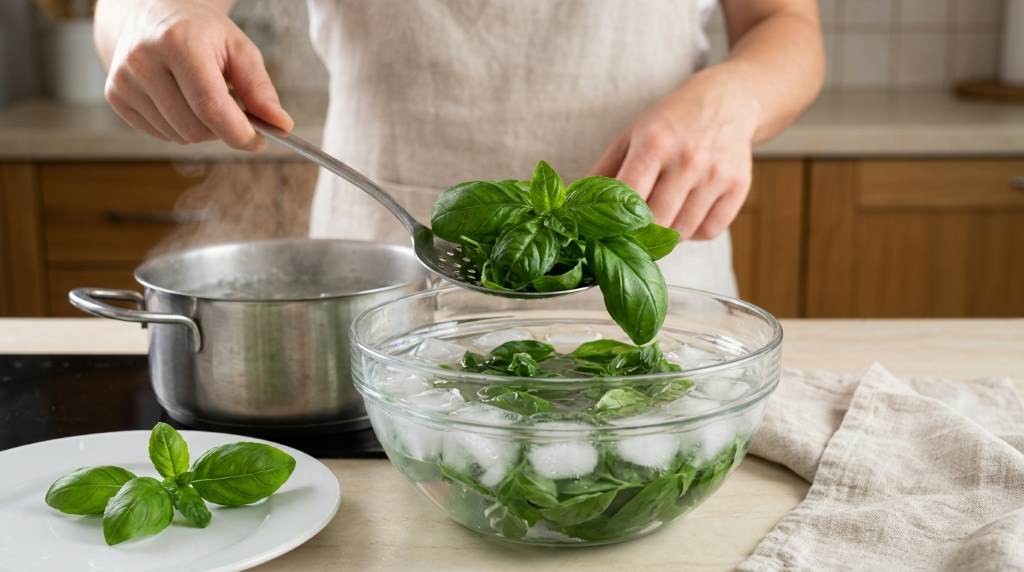
Blanching is one of the most effective ways to preserve basil color during freezing. This process briefly exposes basil to hot water before rapid cooling. As a result, enzyme activity slows down and oxidation decreases. The leaves stay greener and fresher for longer periods.
Bring a pot of water to a gentle boil before preparing an ice bath nearby. Dip basil leaves into boiling water for about 5 seconds only. Then transfer them immediately into ice water to stop the cooking process. Similar food preservation principles are discussed in articles like what is bologna made of flavor stabilized, where processing methods influence texture and shelf life.
Dry Basil After Blanching
After cooling the basil, pat the leaves dry carefully using paper towels. Avoid rubbing the leaves because they bruise very easily. Removing excess water prevents freezer burn and discoloration. Dry basil also stores more efficiently in airtight containers.
Spread the leaves in a single layer while drying for better airflow. Some home cooks use a fan to speed up the process gently. However, avoid direct sunlight because heat reduces basil flavor quickly. Once dry, the leaves are ready for freezing.
Freeze Basil In Olive Oil For Better Color Preservation
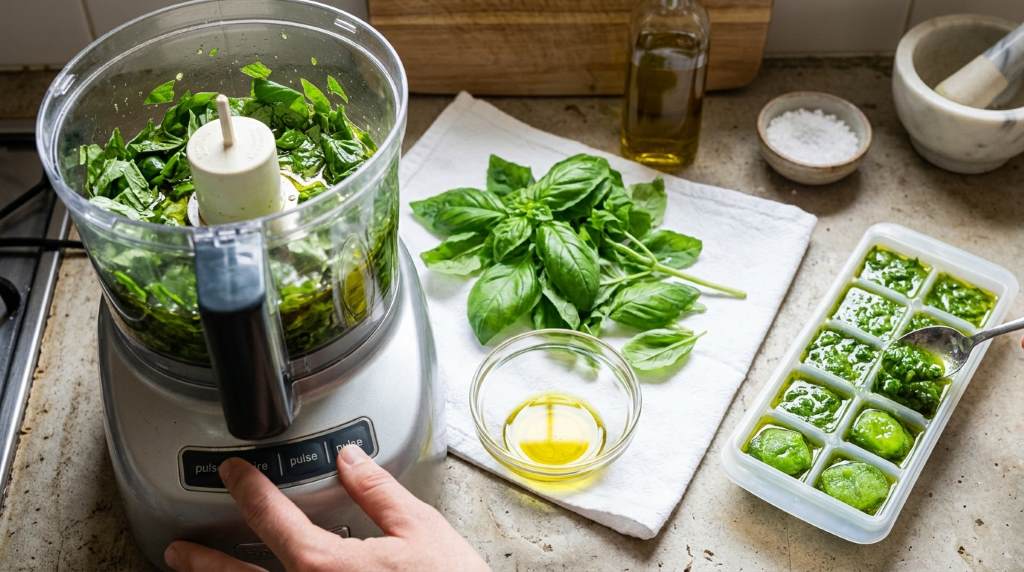
Freezing basil in olive oil helps protect the leaves from air exposure. Oil creates a barrier that slows oxidation and keeps the herb greener. This method works especially well for pasta dishes, soups, and sauces. Many chefs prefer this approach because it preserves flavor intensely.
Place chopped basil into an ice cube tray and cover it lightly with olive oil. Freeze the cubes until solid before transferring them into freezer bags. Small cubes make portion control easier during cooking. In addition, the oil prevents freezer dryness and texture damage.
Best Uses For Basil Oil Cubes
- Add directly to pasta sauce while cooking.
- Mix into soups for extra flavor.
- Use in marinades for chicken or seafood.
- Blend into homemade pesto quickly.
- Stir into roasted vegetables before serving.
Oil-packed basil cubes usually maintain better color than plain frozen leaves. They also save preparation time during busy meals. Since basil flavor spreads into the oil, every cube adds rich aroma to recipes. This method is simple, practical, and highly effective.
How To Freeze Fresh Basil Without It Turning Black Using Pesto
Pesto freezing is another excellent preservation method. Blending basil with oil, garlic, nuts, and cheese protects the leaves naturally from oxidation. As a result, the sauce stays greener for longer in frozen storage. This option works especially well for people who cook frequently with Italian flavors.
Prepare fresh pesto using your preferred recipe before spooning it into freezer-safe containers. Leave slight space at the top because frozen sauces expand. Small containers help reduce waste and simplify portioning later. Freezing pesto also eliminates the need for thawing whole basil leaves.
Tips For Freezing Pesto Successfully
- Use airtight containers to prevent freezer odors.
- Add a thin oil layer on top before freezing.
- Freeze in meal-sized portions for convenience.
- Label containers with dates clearly.
- Use within six months for best flavor.
Some people skip cheese when freezing pesto because dairy changes texture over time. Instead, they add cheese after thawing the sauce. This method often produces fresher flavor and smoother consistency. Simple adjustments can improve long-term storage quality greatly.
Common Mistakes That Make Basil Turn Black
One common mistake is freezing wet basil leaves directly in bags. Moisture forms large ice crystals that rupture the leaf structure quickly. As a result, basil becomes dark and mushy after thawing. Proper drying prevents this issue effectively.
Another mistake involves storing basil near strong-smelling foods. Basil absorbs odors easily because of its delicate oils. Therefore, use airtight freezer bags or sealed containers every time. Careful storage protects both flavor and appearance.
Overhandling basil also damages the leaves before freezing. Rough chopping, squeezing, or pressing causes bruising and oxidation. Gentle preparation keeps basil looking fresher for longer. Small handling improvements create noticeable results.
How Long Frozen Basil Lasts
Frozen basil typically lasts between six and eight months when stored correctly. Oil-packed basil and pesto often maintain quality longer than plain leaves. However, flavor gradually weakens over time even in ideal conditions. Using basil earlier produces the best cooking results.
Always label storage containers with freezing dates to track freshness easily. Older basil may still be safe to eat but lose aroma and color intensity. Rotate frozen herbs regularly to reduce waste. Organized storage improves kitchen efficiency significantly.
Best Containers For Freezing Basil
Freezer-safe silicone trays work very well for basil cubes and pesto portions. They allow easy removal without damaging frozen contents. Vacuum-sealed bags also reduce air exposure effectively. Choosing quality storage materials helps preserve basil color longer.
Glass containers provide another reliable storage option for pesto. However, leave enough headspace because frozen mixtures expand slightly. Thin plastic containers crack more easily in freezing temperatures. Durable containers improve both safety and storage quality.
How To Use Frozen Basil In Cooking
Frozen basil works best in cooked dishes rather than fresh salads. The freezing process softens the leaves, which changes their texture. However, flavor remains strong when added to hot recipes. Soups, sauces, and casseroles benefit greatly from frozen basil.
Do not thaw basil fully before cooking because it darkens quickly at room temperature. Instead, add frozen portions directly into warm dishes during preparation. This technique preserves more aroma and freshness. Efficient handling keeps the herb tasting better.
People who regularly preserve herbs often follow additional freshness guides such as how to tell if cocoa butter is bad to improve ingredient storage habits and avoid spoilage at home.
Conclusion
Learning how to freeze fresh basil without it turning black helps you preserve flavor, reduce waste, and enjoy fresh herbs throughout the year. Blanching, olive oil freezing, and pesto preparation all provide excellent results when done carefully. Proper drying and airtight storage also play major roles in maintaining basil quality. With these simple methods, you can keep basil green, flavorful, and ready for cooking anytime. Start freezing your basil correctly today and make every homemade dish taste fresher and more delicious.
FAQs
Can you freeze basil without blanching it?
Yes, but freezing basil in olive oil usually preserves color better than freezing plain leaves directly.
Why does basil turn black in the freezer?
Basil turns black because oxidation and moisture damage the delicate leaves during freezing.
How long can frozen basil stay fresh?
Frozen basil stays fresh for about six to eight months in airtight storage.
Can frozen basil be used in salads?
No, frozen basil works better in cooked dishes because thawed leaves become soft.
What is the best way to freeze basil for pasta sauce?
Freezing chopped basil in olive oil cubes works best for pasta sauces and soups.