
Green beans. Humble, versatile, and often relegated to the side of the plate as an afterthought. But these vibrant green gems deserve more than a quick dunk in boiling water and a pat of butter. With a little know-how, you can transform this simple vegetable into a culinary delight that stands out on its own. This guide delves deep into the world of boiling green beans, exploring the nuances of timing, technique, and flavor to help you achieve perfectly cooked, vibrant green beans every time.
Why Boiling?
While roasting, grilling, and sautéing offer exciting ways to prepare green beans, boiling remains a classic for a reason. It’s quick, easy, and requires minimal equipment. Plus, it provides a blank canvas for a myriad of flavors. But beware, boiling can also lead to mushy, bland, and olive-drab green beans if not done correctly. For a deeper dive into similar boiling techniques, explore Southwaterkitchen blog for helpful tips on different ingredients.

The Perfect Boil: A Step-by-Step Guide
- The Prep:
- Choosing your beans: Opt for fresh, young green beans with a vibrant green color and firm texture. Avoid those with brown spots or signs of wilting.
- Trimming: Snap off the stem end of each bean. You can leave the delicate tail end intact or trim it for a more uniform look.
- Washing: Rinse the beans thoroughly under cold water to remove any dirt or debris.
- The Boil:
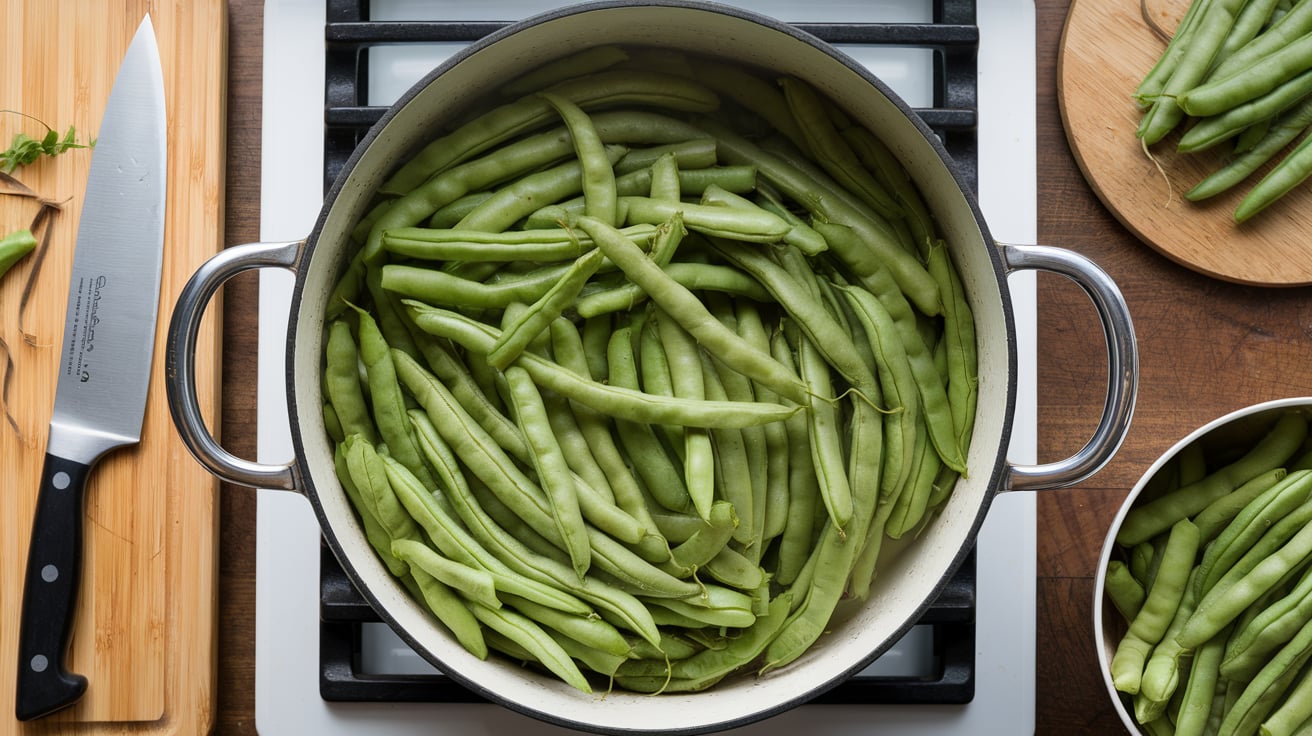
- The Pot: Choose a pot large enough to comfortably hold the green beans with ample water to circulate.
- The Water: Fill the pot with enough water to cover the beans by about two inches. This ensures even cooking.
- The Salt: Don’t be shy with the salt! Generously salting the water seasons the beans from within and helps maintain their vibrant green color. Aim for a salinity similar to seawater.
- The Boil: Bring the water to a rolling boil over high heat, then cook the beans.
- The Cooking:
- Adding the beans: Gently add the trimmed green beans to the boiling water. The water temperature will drop slightly, but it should return to a boil quickly.
- Cooking time: This is where the magic happens, and precision is key. Aim for a cooking time of 3 to 5 minutes for crisp-tender green beans.
- 3 minutes: Yields bright green, snappy beans with a slight crunch. Ideal for salads and cold dishes.
- 4 minutes: Offers a balance of tenderness and crunch. Perfect for most applications.
- 5 minutes: Produces softer beans, suitable for casseroles or dishes where the beans will be cooked further.
- Testing for doneness: Start checking for doneness at the 3-minute mark. A perfectly cooked green bean should be tender but still retain a slight snap when bitten. Avoid overcooking, which leads to mushy, dull-colored beans.
- The Shock:
- The Ice Bath: While the beans are boiling, prepare an ice bath by filling a large bowl with ice water.
- The Plunge: As soon as the beans reach your desired level of doneness, immediately drain them and plunge them into the ice bath. This “shocks” the beans, halting the cooking process and preserving their vibrant green color.
- The Dry: Once the beans are completely cool, drain them again and pat them dry with a clean kitchen towel.
Beyond the Basics: Flavor & Flair
Perfectly boiled green beans are delicious on their own, but why stop there? Here are some ideas to elevate your green bean game:
- Butter and Herbs: Toss the cooked beans with a knob of melted butter, a squeeze of lemon juice, and a sprinkle of fresh herbs like parsley, dill, or thyme.
- Garlic Infusion: Sauté a few cloves of minced garlic in olive oil until fragrant, then toss with the cooked beans.
- Asian Inspiration: Add a splash of soy sauce, a drizzle of sesame oil, and a sprinkle of toasted sesame seeds for an Asian-inspired twist.
- Spicy Kick: Spice things up with a pinch of red pepper flakes or a dash of your favorite hot sauce.
- Crunchy Toppings: Add texture and flavor with toasted almonds, crispy fried onions, or a sprinkle of Parmesan cheese.
For an adventurous palate, consider pairing your green beans with other boiled delicacies, like boiled chicken livers to create a delightful, contrasting plate.
Troubleshooting
- Overcooked beans: If your beans end up mushy, don’t despair! You can still salvage them by pureeing them into a soup or adding them to a casserole.
- Dull color: If your beans lack vibrancy, it could be due to overcooking or not enough salt in the boiling water.
- Uneven cooking: Ensure your beans are roughly the same size for even cooking. If using very thick beans, you may need to increase the cooking time slightly.
Tips for Success
- Don’t overcrowd the pot: Give the beans enough space to cook evenly. If you have a large batch, cook them in batches.
- Use a timer: Keep a close eye on the clock to avoid overcooking.
- Taste test: The best way to determine doneness is to taste a bean.
- Serve immediately: For optimal flavor and texture, serve the green beans immediately after cooking.
More Than Just a Side Dish
Boiled green beans are incredibly versatile. Use them as a base for salads, add them to stir-fries, pasta dishes, or casseroles. They also make a healthy and delicious snack on their own.
By mastering the art of boiling green beans, you can transform this humble vegetable into a star ingredient. So, ditch the bland and embrace the bold! With a little practice and these tips, you’ll be serving up perfectly cooked, flavorful green beans that will impress your family and friends.