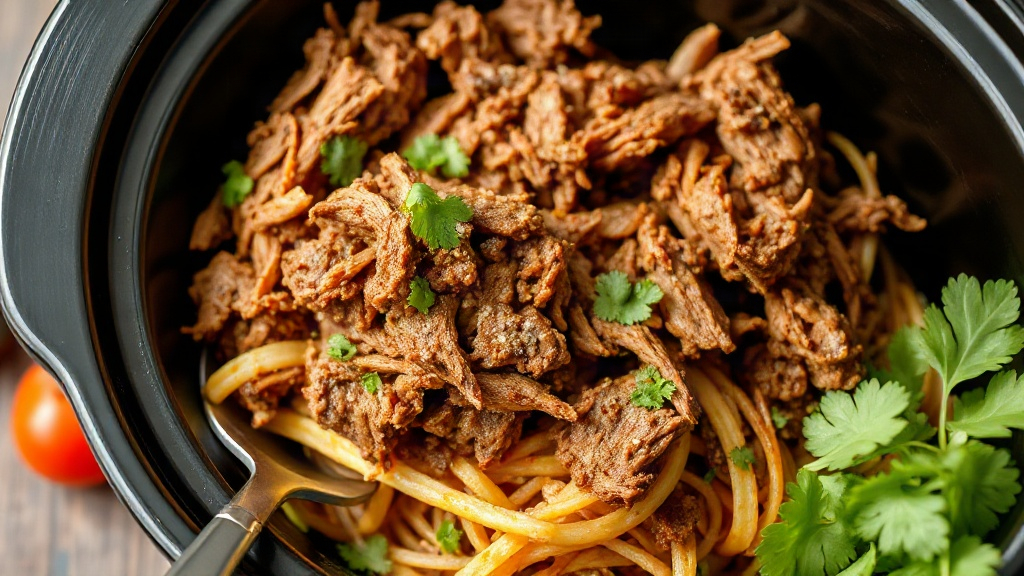
Slow Cooker Mexican Shredded Beef solves a familiar weeknight problem: you want deep, savory meat for tacos, but you have no time to stand at the stove. The chuck roast that turns tough on a grill falls apart beautifully after eight hours in a covered pot. This method trades hands-on work for patient heat, and the results reward you with a batch of meat that carries dozens of meals.
Quick answer: Season a chuck roast generously, sear it if you have ten minutes, then braise it low with onions, garlic, chiles, cumin, and a splash of citrus or stock for 8 to 10 hours. Shred it in its own juices. The meat should pull apart with a fork and stay moist, not dry out.
This article covers what the dish actually is, why the slow cooker suits it so well, and the practices that separate tender beef from a dry roast. You will also find the mistakes that ruin batches and answers to the questions cooks ask most.
What is Slow Cooker Mexican Shredded Beef?
At its core, this is a braised beef dish built on Mexican flavors and cooked in a slow cooker until the meat shreds. The cut matters more than the machine. Chuck roast is the standard choice because its heavy marbling bastes the meat from the inside as it cooks. Brisket and round also work, though round dries out faster.
The seasoning follows a loose pattern rather than one fixed recipe. You will typically see:
- Dried chiles or chili powder for earthy heat
- Cumin, oregano, and garlic for depth
- Onion, often charred first
- A liquid such as beef stock, crushed tomatoes, or orange juice
- Acid from lime or vinegar to brighten the finished meat
That combination produces a flavor profile closer to barbacoa or carne asada than to a plain pot roast. The long cook time lets the chiles and spices bloom into the beef fat, so the seasoning reaches the center of every shred.
A lean cut like sirloin will turn stringy and dry no matter how good your slow cooker is. Fat and connective tissue are what break down into gelatin, and that gelatin is what makes each shred glossy instead of chalky.
The dish is versatile by design. Pile it into corn tortillas for tacos, layer it into enchiladas, scatter it over nachos, or fold it into a quesadilla. Some cooks serve it over rice or eggs the next morning. One batch of roughly three pounds feeds a family for several meals.
Regional Mexican cooking has many versions of braised, shredded beef, from barbacoa de res to machaca. The slow cooker version adapts those techniques for a home kitchen with limited time. You get similar tenderness without tending a fire or monitoring a pot for hours.
Key takeaway: the dish is defined by a fatty cut, a chile-and-cumin braise, and enough time for the fibers to collapse.
Why Slow Cooker Mexican Shredded Beef matters
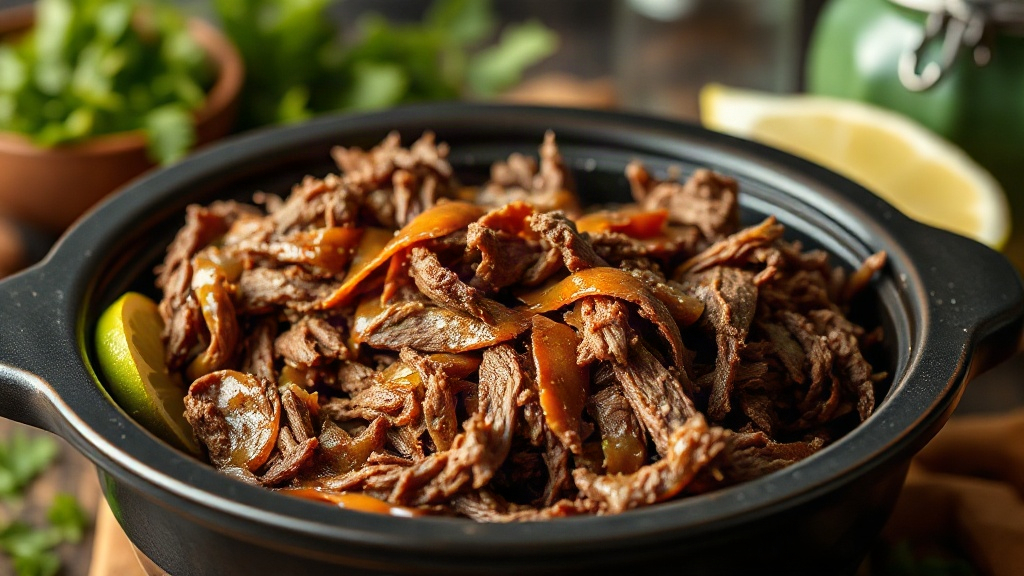
Moist, even heat is the whole game with tough cuts. A chuck roast needs sustained temperatures around a gentle simmer to convert collagen into gelatin. A slow cooker holds that range for hours without babysitting, which is exactly what a braise requires.
Compare the options honestly. An oven braise works well but ties up your kitchen and needs a check every hour. A pressure cooker gets you to shreddable beef in about an hour, though the texture is slightly less silky. The slow cooker sits in the middle: set it in the morning, and dinner is done when you walk in.
Comparison: cooking methods for shredded beef
Each method can produce tender beef; the trade-off is time versus attention versus texture.
| Method | Typical time | Attention needed | Texture |
|---|---|---|---|
| Slow cooker | 8–10 hours | Set and forget | Very tender, moist |
| Oven braise | 3–4 hours | Hourly checks | Tender, slightly firmer |
| Pressure cooker | 45–60 minutes | Hands-on start | Tender, less silky |
Notice the time gap between a slow cooker and a pressure cooker is not the deciding factor. The slow cooker wins on convenience because it runs unattended while you work, sleep, or run errands.
There is a practical payoff too. Three pounds of chuck yields enough shredded beef for about 12 generous tacos, often with leftovers. Portion it into containers and you have lunch or a fast dinner for days. That batch cooking saves both money and decision fatigue during a busy week.
The flavor also improves overnight. Spices meld with the beef fat as it rests, so day-two leftovers often taste richer than the first serving. This makes the dish a smart choice if you cook ahead for the week.
One cooking session produces multiple meals, and the flavor deepens by the next day. For anyone feeding a household on a schedule, that is hard to beat.
Key takeaway: the slow cooker turns an inexpensive, tough cut into a week’s worth of versatile protein with almost no attention.
Best practices
Good results start before the meat goes in the pot. Pat the roast dry and season it heavily; use about one teaspoon of salt per pound of beef. If you have ten minutes, sear all sides in a hot skillet first. That browning adds a roasted depth the slow cooker alone cannot create.
Build flavor in layers. Char an onion and a few garlic cloves in the same skillet, then add them to the pot. Toast ground cumin and oregano briefly in the residual oil before adding them, which wakes up their aroma. A spoonful of tomato paste cooked for a minute adds sweetness and body.
Choose your liquid with care. Keep it to about one cup for a three-pound roast. The meat releases plenty of its own juices, and too much liquid dilutes the braise into soup. Beef stock, crushed tomatoes, or a mix of orange juice and stock all work; avoid filling the pot halfway.
Cook on low for 8 to 10 hours. A meat thermometer helps: the roast should hit at least 200°F (93°C) before it shreds easily. If it resists a fork at 195°F, give it another hour rather than forcing it.
Pull the beef apart directly in the pot, or transfer it to a bowl with a few spoonfuls of the cooking liquid. The meat reabsorbs moisture as you work, which keeps every shred juicy.
Finish the meat with fresh acid and herbs just before serving. A squeeze of lime and a handful of chopped cilantro cut through the richness. Taste and add salt; braised meat often needs more than you expect.
Keep the leftover braising liquid. Skim the fat and use the rest to moisten leftovers, cook rice, or thin out a sauce. It carries most of the chile and spice flavor.
Aim for the roast to stay partly submerged, not swimming. Resting the meat fat-side up also lets the fat baste the surface as it renders.
Key takeaway: season heavily, sear if you can, limit the liquid, cook to temperature rather than the clock, and finish with acid.
Common mistakes to avoid
The most frequent failure is overcooking lean meat. People buy a trimmed “lean” roast, cook it for ten hours, and end up with dry, stringy beef. Fat is your friend here, so choose chuck with visible marbling and skip the lean cuts.
The second mistake is too much liquid. Cooks treat braising like boiling and fill the pot, which leaves the meat pale and washed out. Remember the one-cup guideline, and let the roast cook partly above the liquid line.
Skipping salt is another quiet culprit. Underseasoned beef tastes flat no matter how long it cooks. Salt early and taste the finished meat before serving, since the cooking liquid absorbs a lot of the seasoning.
A few more traps show up often:
- Shredding too early, when the meat is still firm, which tears the fibers instead of separating them
- Adding fresh herbs at the start, where they turn bitter over eight hours
- Forgetting the acid, which leaves the dish heavy and dull
- Lifting the lid repeatedly, which drops the heat and slows cooking
Never let the slow cooker sit on “warm” for hours after cooking. Cool leftover beef within two hours and refrigerate it in shallow containers. Reheat to 165°F before serving again.
Be careful with strong spices too. Cumin and chili powder intensify as they sit, so a batch that tastes mild at hour four can turn harsh by hour nine. Start moderate and adjust at the end.
Key takeaway: most ruined batches trace back to a lean cut, a flooded pot, or too little salt; fix those three and the rest follows.
FAQ
How much shredded beef do I need per person?
Plan on about one-third to one-half pound of raw chuck per person for a main dish. A three-pound roast serves six to eight people generously as tacos, with some leftovers.
Can I cook this on high instead of low?
Yes, but use high only when time is short. Cook on high for 4 to 5 hours, then check with a fork. Low heat for 8 to 10 hours gives a more even texture and less risk of drying the edges.
Can I freeze the finished shredded beef?
Freeze cooled beef in airtight containers for up to three months. Add a spoonful of the defatted braising liquid to each portion so it stays moist when reheated.
What is the cheapest cut that still shreds well?
Chuck is usually the best value, though beef cheeks and brisket point also work. Avoid stew meat sold in small cubes; it cooks unevenly and turns dry.
How spicy is this dish?
Heat depends entirely on your chiles. Mild ancho and guajillo peppers add deep flavor with little burn, while chipotle or cayenne raises the heat. Adjust at the end, not the start.
Conclusion
The best batches share a few habits: a well-marbled chuck roast, aggressive seasoning, restrained liquid, and enough time for the meat to reach 200°F. Shred it in its juices, finish with lime and cilantro, and you have a protein that works for tacos, bowls, and leftovers all week. The slow cooker does the heavy lifting; your job is choosing the right cut and resisting the urge to rush. Buy a chuck roast this week, set it on low before you leave the house, and taste how much flavor an unattended pot can build. Slow Cooker Mexican Shredded Beef rewards patience more than skill, and that is exactly why it belongs in your rotation.