Learning how to sprout mung beans in a mason jar is one of the easiest ways to grow fresh and healthy food at home. Mung bean sprouts contain vitamin C, fiber, and plant-based protein that support a balanced diet. According to nutrition studies, sprouts can contain higher antioxidant levels than fully grown vegetables. In addition, homemade sprouts cost far less than store-bought options and stay fresher when prepared correctly. This simple method requires very little equipment and delivers crunchy sprouts within a few days.
Why Mung Bean Sprouts Are Popular
Mung bean sprouts remain popular because they are affordable, nutritious, and simple to grow indoors. Many home cooks use them in stir-fries, soups, salads, and sandwiches for extra crunch. They also grow quickly compared to other sprouting seeds, making them ideal for beginners. Furthermore, mason jars make the process cleaner and easier to manage every day.
Fresh sprouts also support sustainable kitchen habits because they reduce packaging waste from grocery stores. Many families now grow sprouts year-round without needing a garden or outdoor space. While researching food preparation methods, some people also explore topics like what is bologna made of flavor stabilized to better understand everyday foods. In the same way, growing your own sprouts helps you stay informed about what you eat. As a result, homemade sprouting continues to gain popularity across health-conscious households.
What You Need To Sprout Mung Beans In A Mason Jar
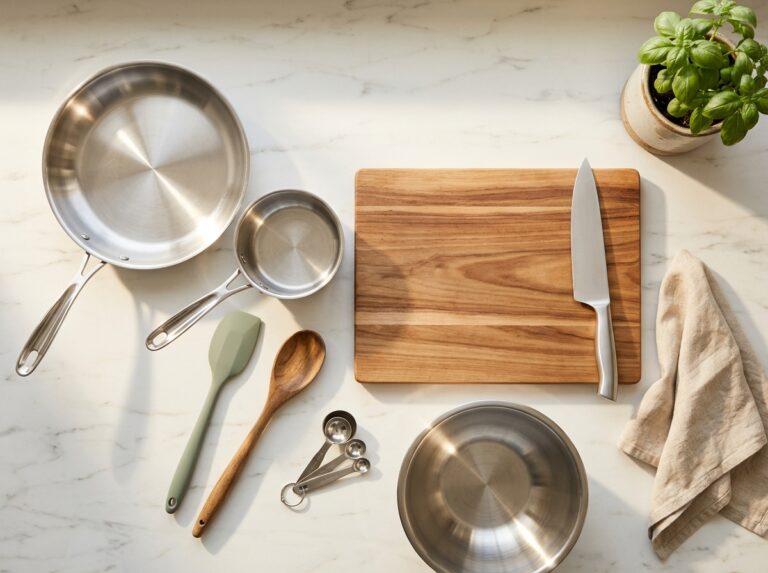
You only need a few simple tools to begin the sprouting process at home. Most of these items already exist in a standard kitchen, so setup costs remain very low. Clean equipment also helps prevent bacteria growth and keeps sprouts safe to eat. Therefore, preparation matters before you begin.
- 1 wide-mouth mason jar
- 2 to 3 tablespoons dried mung beans
- Clean filtered water
- Mesh sprouting lid or cheesecloth
- Rubber band if using cloth
- Large bowl for rinsing
Choose high-quality mung beans labeled specifically for sprouting whenever possible. Beans sold for gardening or farming may contain chemicals that are unsafe for food use. Organic mung beans often provide better germination and fresher taste during the growing process. Additionally, filtered water helps reduce unpleasant odors during sprouting.
How To Prepare The Mason Jar Properly
Start by washing the mason jar thoroughly with hot water and mild soap before use. Rinse the jar well so no soap residue remains inside the container afterward. Clean equipment lowers contamination risks and helps sprouts stay fresh longer. Consequently, sanitation should always come first.
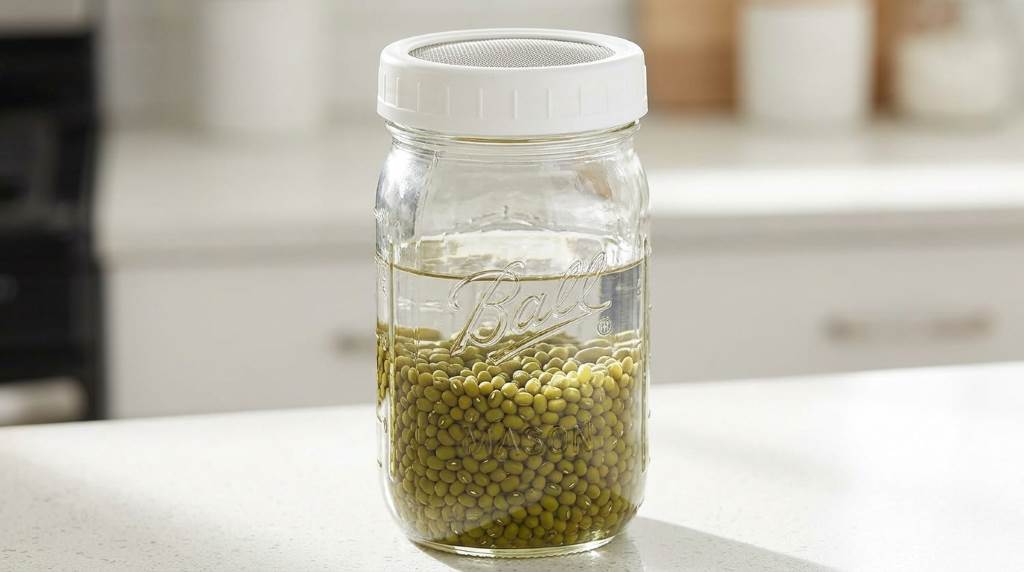
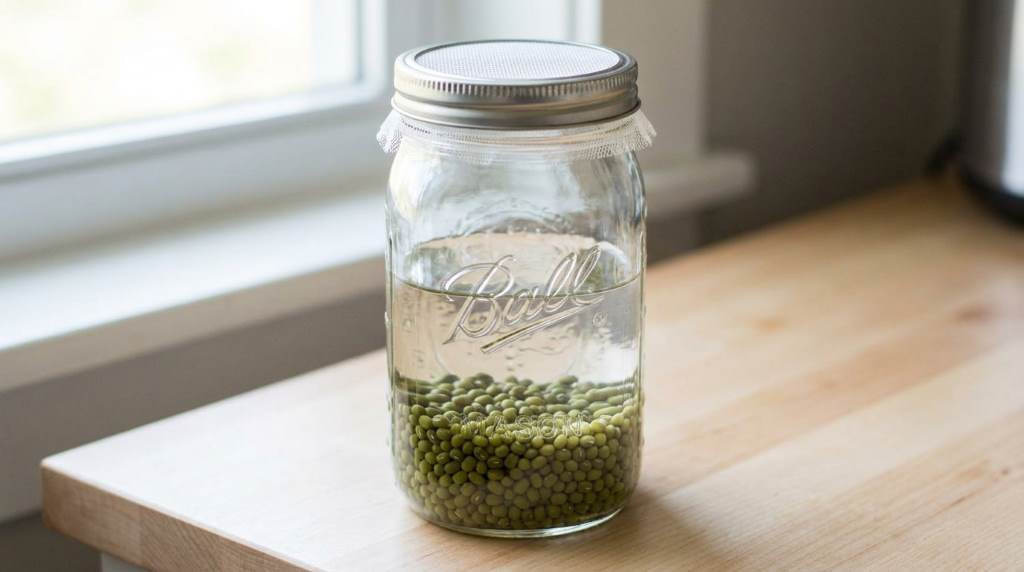
After cleaning the jar, place the dried mung beans inside and inspect them carefully. Remove broken beans, stones, or debris before soaking to improve sprouting success. Fill the jar halfway with cool water because the beans expand significantly overnight. Then cover the opening with a mesh lid or cloth securely.
Step By Step Process For Sprouting Mung Beans
Step 1: Soak The Beans Overnight
Allow the mung beans to soak for at least eight to twelve hours at room temperature. During this time, the beans absorb water and begin activating the germination process naturally. Most people prefer soaking them overnight because it fits easily into a regular routine. As a result, the beans become ready for sprouting by morning.
Once soaking finishes, drain all the water completely from the mason jar before continuing. Excess standing water can cause mold growth or unpleasant smells during sprouting. Turn the jar upside down at a slight angle to remove leftover moisture effectively. Therefore, proper draining plays a major role in healthy sprouts.
Step 2: Rinse And Drain Twice Daily
Rinse the beans with fresh water every morning and evening throughout the growing period. Swirl the water gently around the jar to clean the sprouts evenly from all sides. After rinsing, drain thoroughly so the sprouts stay moist but not submerged in water. Consistent rinsing also improves texture and freshness.
Store the jar upside down at an angle between rinses to allow airflow around the sprouts. Many people place the jar inside a bowl or dish rack to catch excess water safely. While learning kitchen growing methods, some homeowners also enjoy reading guides about how to grow passion fruit in pots for small-space gardening inspiration. Both methods help create fresh food options right at home. Consequently, indoor growing continues to attract beginner gardeners.
Step 3: Watch The Sprouts Grow
Small white tails usually appear within one to two days after the soaking process finishes. By day three or four, the sprouts become longer, thicker, and ready for eating in many recipes. Keep the jar away from direct sunlight because excessive heat may damage the sprouts. Instead, choose a cool and shaded kitchen counter.
Some people prefer shorter crunchy sprouts while others enjoy longer bean shoots for cooking. Taste the sprouts daily during growth to determine your preferred texture and flavor. Once the sprouts reach the desired size, give them one final rinse before storage. Then move them into the refrigerator immediately.
Common Mistakes To Avoid When Sprouting
One common mistake involves failing to drain the mason jar properly after each rinse. Standing water encourages bacteria and mold that can ruin the entire batch quickly. Another issue comes from using poor-quality beans that do not germinate evenly. Therefore, always choose fresh sprouting beans from trusted sources.
Many beginners also forget to rinse the sprouts consistently every day during growth. Dry sprouts may stop developing while overly wet sprouts can spoil unexpectedly. In addition, placing the jar in direct sunlight often overheats the growing beans and affects flavor. Simple daily care usually prevents these common problems effectively.
How To Store Fresh Mung Bean Sprouts
Fresh mung bean sprouts should always remain refrigerated after the growing process finishes completely. Pat the sprouts dry gently using a clean towel before transferring them into storage containers. Too much moisture inside the container may shorten shelf life significantly over time. Consequently, dry storage helps preserve freshness.
Use airtight containers lined with paper towels to absorb extra moisture from the sprouts naturally. Most homemade mung bean sprouts stay fresh for about five to seven days in the refrigerator. If the sprouts develop a sour smell or slimy texture, discard them immediately for safety reasons. Proper storage keeps them crisp and enjoyable longer.
Best Ways To Eat Mung Bean Sprouts
Mung bean sprouts work well in many simple meals because of their crisp texture and mild flavor. Add them raw to salads or sandwiches for extra crunch without overpowering other ingredients. They also blend nicely into noodle dishes, wraps, and homemade fried rice recipes. Furthermore, they cook very quickly in hot dishes.
Many Asian-inspired recipes include mung bean sprouts in soups and stir-fries for freshness and texture. Light cooking preserves their crunch while reducing excess moisture during preparation. Some home cooks even combine sprouts with eggs or tofu for quick high-protein meals. As a result, mung bean sprouts fit many healthy eating styles.
Health Benefits Of Mung Bean Sprouts
Mung bean sprouts provide several nutrients that support overall wellness and balanced daily nutrition. They contain fiber that supports digestion along with vitamin C that helps immune function naturally. Additionally, sprouts remain low in calories while offering protein and antioxidants for healthy meals. Therefore, they work well in many weight-conscious diets.
Research also suggests that sprouting increases nutrient availability in beans compared to their dry form. The sprouting process may improve digestibility and reduce compounds that sometimes cause bloating. While exploring healthy kitchen ingredients, many readers also search for guides like how to tell if cocoa butter is bad to maintain better food quality awareness. Learning about ingredient freshness supports safer cooking habits overall. Consequently, more households now prefer homemade food preparation methods.
Why Mason Jars Work Best For Sprouting
Mason jars remain one of the best containers for home sprouting because they are affordable and reusable. Their transparent glass design allows you to monitor growth without opening the container repeatedly. Wide-mouth jars also make rinsing and draining easier throughout the entire process. Moreover, they clean easily after every batch.
The airflow inside a tilted mason jar supports healthy sprout development without complicated equipment. Unlike plastic containers, glass jars do not absorb odors or stains after repeated use. They also fit conveniently on kitchen counters without taking up much storage space. Therefore, many beginners choose mason jars for their first sprouting experience.
Conclusion
Understanding how to sprout mung beans in a mason jar can help you create fresh and nutritious food at home with minimal effort. This simple process requires only a few kitchen tools, daily rinsing, and proper storage habits for success. Homemade sprouts taste fresher, cost less, and provide a healthy addition to many meals throughout the week. Start your first batch today and enjoy the benefits of growing your own crunchy sprouts naturally. For more food and ingredient tips, you can also explore how to tell if cocoa butter is bad for smarter kitchen habits.
FAQs About How To Sprout Mung Beans In A Mason Jar
How long does it take to sprout mung beans in a mason jar?
Mung beans usually take three to five days to fully sprout depending on room temperature.
Can I eat mung bean sprouts raw?
Yes, you can eat them raw if they are fresh, clean, and properly rinsed daily.
Why do my mung bean sprouts smell bad?
Bad smells usually happen because the sprouts were not drained or rinsed properly.
Do mung bean sprouts need sunlight?
No, mung bean sprouts grow best in a cool and shaded indoor location.
Can I reuse the same mason jar for another batch?
Yes, simply wash and sanitize the jar thoroughly before starting a new batch.