Learning how to dehydrate spirulina paste at home can help you preserve nutrients, reduce waste, and create a convenient superfood powder for daily use. Spirulina contains around 60% protein by weight, which makes it one of the most nutrient-dense foods available. Many health enthusiasts also value spirulina because it contains antioxidants, vitamins, and minerals that support wellness. Moreover, dehydrating spirulina at home gives you complete control over quality and storage conditions. This guide explains every important step in a simple and practical way so you can safely dry spirulina paste and enjoy long-lasting results.
Why People Prefer Dehydrating Spirulina Paste At Home
Many people choose homemade dehydration because commercial spirulina products often go through heavy processing. Home dehydration allows you to preserve more nutrients while avoiding unnecessary additives. In addition, you can prepare small batches that stay fresh for longer periods. If you enjoy homemade food preservation techniques like how to make sourdough starter, you may also appreciate the control and simplicity of dehydrating spirulina paste yourself.
Fresh spirulina paste spoils quickly because it contains high moisture levels. Drying the paste removes water and slows bacterial growth significantly. As a result, dehydrated spirulina can last for months when stored properly. Many people also prefer homemade spirulina because they can monitor hygiene and drying temperatures carefully.
Benefits Of Homemade Spirulina Powder
- Helps preserve nutrients for longer use
- Reduces food waste from excess spirulina paste
- Allows easier storage and transportation
- Creates a versatile powder for smoothies and recipes
- Supports healthier homemade food preparation
Essential Equipment Needed For Spirulina Dehydration
Before starting the process, gather the right tools to make dehydration easier and safer. A food dehydrator works best because it provides consistent low temperatures during drying. However, you can also use an oven with adjustable low heat settings if necessary. Clean equipment is extremely important because spirulina absorbs contaminants easily.
Most beginners find the process simple once they organize everything in advance. You should prepare drying trays, parchment paper, airtight containers, and a spatula before handling the paste. In addition, maintaining good airflow during dehydration helps achieve even drying results. Proper preparation also reduces the risk of moisture remaining trapped inside the spirulina.
Recommended Tools For Best Results
- Food dehydrator with temperature control
- Non-stick drying sheets or parchment paper
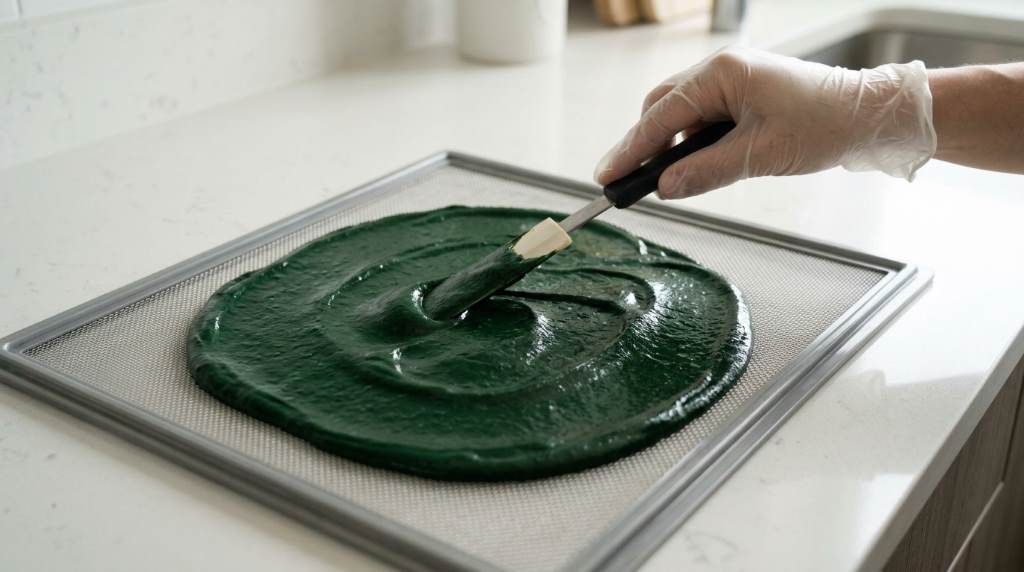
- Spatula for spreading paste evenly
- Glass storage jars with airtight lids
- Kitchen gloves for hygienic handling
How To Prepare Spirulina Paste Before Drying
Proper preparation plays a major role in successful dehydration. Start by checking the spirulina paste for freshness and clean texture before drying. Fresh spirulina should smell mild and earthy without sour or unpleasant odors. If the paste appears slimy or discolored, avoid using it.
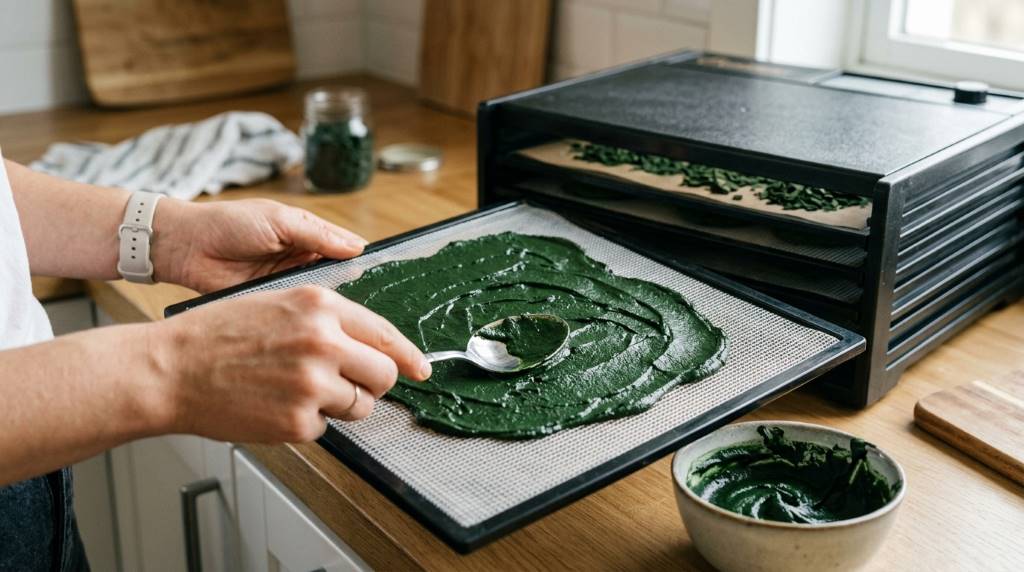
Spread the spirulina paste evenly onto dehydrator trays lined with parchment paper. Thin layers dry much faster and reduce the chance of uneven moisture retention. Ideally, keep the layer thickness around one-quarter inch for balanced drying. Similar to techniques used in make sourdough bread at home methods, consistency and patience are important for achieving quality homemade results.
Many people overlook the importance of sanitation during preparation. Wash your hands thoroughly before handling the spirulina paste. Furthermore, disinfect trays and utensils to prevent bacterial contamination. Clean preparation conditions help maintain both flavor and nutritional quality.
Step By Step Process For How To Dehydrate Spirulina Paste At Home
Understanding the correct drying process is essential for preserving nutrients properly. Spirulina contains heat-sensitive compounds that may lose effectiveness at very high temperatures. Therefore, low and slow dehydration works best for maintaining nutritional value. Following a careful process also helps achieve a smooth and stable final powder.
Step 1: Set The Correct Temperature
Set your dehydrator temperature between 95°F and 115°F for optimal nutrient preservation. Lower temperatures take more time, but they help maintain spirulina’s color and nutritional quality. If you use an oven, choose the lowest possible setting and keep the door slightly open for airflow. Consistent heat produces more even drying results.
Step 2: Dry The Spirulina Paste Slowly
Place the trays carefully inside the dehydrator without overcrowding them. Allow the spirulina to dry gradually for 6 to 12 hours depending on thickness and humidity levels. Check the paste every few hours to monitor texture changes during drying. Rotate trays occasionally if your dehydrator heats unevenly.
Step 3: Check For Complete Dryness
Fully dried spirulina should feel crisp and break apart easily when touched. Soft or sticky spots indicate leftover moisture that may cause spoilage later. Therefore, continue drying until the texture becomes completely brittle throughout the tray. Proper dryness greatly improves shelf life and storage safety.
Step 4: Grind Into Powder
Once fully dried, break the spirulina sheets into smaller pieces before grinding. Use a clean blender, grinder, or food processor to create fine powder. Pulse slowly to prevent overheating the spirulina during grinding. Fine powder blends more smoothly into drinks and recipes.
Best Storage Methods After Dehydration
Storage conditions directly affect the shelf life and nutritional stability of dehydrated spirulina. Always store the powder in airtight containers away from direct sunlight and humidity. Glass jars usually work better than plastic because they resist odors and moisture transfer. Cool and dark storage areas also help maintain freshness.
Many people store dehydrated spirulina in kitchen cabinets or pantry shelves. However, refrigeration can extend freshness even longer in humid climates. Label containers with the dehydration date so you can monitor storage time easily. If stored correctly, dehydrated spirulina powder may remain usable for several months.
Common Storage Mistakes To Avoid
- Using containers with loose lids
- Exposing spirulina to sunlight regularly
- Allowing moisture inside storage jars
- Storing near strong-smelling foods
- Using dirty scoops or utensils
Common Mistakes When Learning How To Dehydrate Spirulina Paste At Home
Beginners often make avoidable mistakes that affect quality and safety. One common issue involves spreading the paste too thickly on trays. Thick layers trap moisture inside and create uneven drying patterns. As a result, the spirulina may spoil more quickly during storage.
Another common mistake involves using excessive heat to speed up drying time. High temperatures can damage nutrients and alter spirulina’s natural color significantly. Additionally, overheating sometimes creates bitter flavors that reduce overall quality. Maintaining patience during dehydration produces much better long-term results.
Some people also skip regular moisture checks during the drying process. Even slightly damp spots can encourage mold growth later. Therefore, inspect the spirulina carefully before storing it in airtight containers. Careful attention during drying improves safety and freshness.
Creative Ways To Use Dehydrated Spirulina Powder
After learning how to dehydrate spirulina paste at home, you can enjoy many practical uses for the final powder. Most people add spirulina powder to smoothies, juices, and protein shakes for extra nutrients. Its mild earthy taste blends especially well with fruits like banana, mango, and pineapple. Small amounts also work well in homemade energy bars and snacks.
Some health-focused cooks mix spirulina powder into soups, salad dressings, and pasta dough. Others use it in homemade wellness recipes and green beverages. If you enjoy exploring unique food culture experiences like the taste of chicago food event, experimenting with spirulina recipes can also become a creative kitchen activity. Moderate use usually provides the best flavor balance in recipes.
Popular Uses For Spirulina Powder
- Smoothies and protein drinks
- Homemade energy bites
- Green pasta or bread dough
- Healthy salad dressings
- Nutrient-rich snack recipes
Safety Tips For Home Spirulina Dehydration
Food safety should always remain a top priority during dehydration. Use only fresh spirulina paste from trusted sources to reduce contamination risks. Low-quality spirulina may contain harmful toxins or heavy metals that affect health negatively. Therefore, source spirulina carefully before beginning the dehydration process.
Maintain clean working conditions throughout every stage of preparation and storage. Wash all trays, tools, and storage containers thoroughly before use. In addition, monitor drying temperatures consistently to avoid bacterial growth caused by insufficient heat. Safe food handling practices protect both quality and health.
If you notice unusual smells, mold, or discoloration after storage, discard the spirulina immediately. Never consume spirulina that appears spoiled or contaminated. Regular inspection helps ensure your homemade spirulina powder stays safe over time. Careful storage habits also reduce unnecessary waste.
Conclusion
Understanding how to dehydrate spirulina paste at home gives you a practical way to preserve nutrients, reduce waste, and create a versatile superfood ingredient. The process becomes simple once you use proper temperatures, clean equipment, and correct storage methods. Additionally, homemade spirulina powder allows greater control over freshness and quality compared to many commercial products. Start with a small batch and practice the process carefully until you feel confident. If you enjoy homemade food preparation and creative kitchen projects, dehydrating spirulina can become a rewarding part of your healthy lifestyle.
What temperature is best for dehydrating spirulina paste?
The ideal temperature range is between 95°F and 115°F to help preserve nutrients.
How long does dehydrated spirulina powder last?
Properly stored spirulina powder can last several months in airtight containers.
Can I use an oven instead of a dehydrator?
Yes, you can use an oven on the lowest heat setting with airflow for drying.
How do I know when spirulina is fully dehydrated?
Fully dried spirulina feels brittle and breaks apart easily without sticky spots.
Can dehydrated spirulina lose nutrients over time?
Yes, poor storage conditions and excessive heat can gradually reduce nutrient quality.