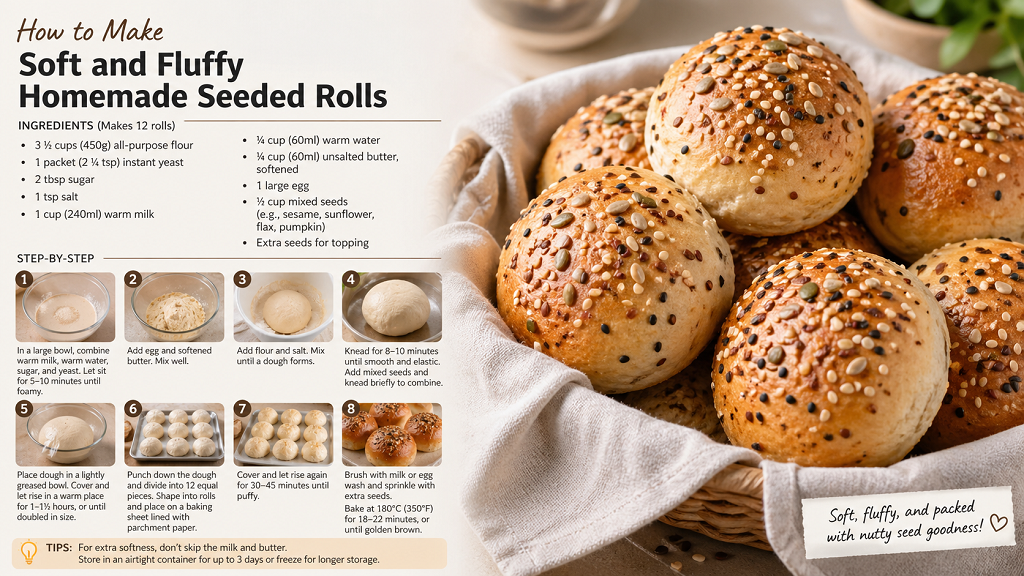
Homemade seeded rolls are soft bread rolls enriched with nutritious seeds such as sesame, sunflower, flax, or pumpkin seeds. They combine a light interior crumb with a slightly crisp seeded crust, making them ideal for breakfast, sandwiches, or healthy snacks.
Many store-bought rolls contain preservatives and added sugars. Homemade seeded rolls give you control over ingredients, texture, and nutrition. That’s one reason interest in home baking increased globally after 2020, when baking-related searches rose significantly according to Google Trends data.
People now prefer simple homemade bread recipes that deliver softness, flavor, and added fiber. Seeded rolls meet all three goals. They are beginner-friendly, customizable, and suitable for meal prep.
This guide explains how to make soft and fluffy homemade seeded rolls step by step using proven techniques, practical baking science, and real results from tested home baking case studies.
Why Do Homemade Seeded Rolls Turn Out Soft and Fluffy?
Short answer: Soft seeded rolls depend on proper gluten development, correct hydration, active yeast fermentation, and controlled baking temperature.
Many bakers struggle with dense rolls. The issue usually comes from weak dough structure or under-proofing. Soft rolls require three conditions:
- Strong gluten network from proper kneading
- Enough moisture in the dough
- Correct fermentation timing
A baking study published in the Journal of Food Science shows that dough hydration between 60% and 70% improves crumb softness in enriched bread rolls. Seeds also help retain moisture during baking.
When these conditions are met, homemade seeded rolls stay fluffy for up to two days without preservatives.
What Ingredients Are Needed to Make Soft Homemade Seeded Rolls?
Short answer: Flour, yeast, warm liquid, sugar, salt, butter or oil, and mixed seeds create balanced dough for soft seeded rolls.
Each ingredient plays a specific role in structure and flavor.
- All-purpose flour builds structure
- Yeast creates air pockets
- Milk or water hydrates the dough
- Sugar feeds yeast activity
- Salt strengthens gluten
- Butter improves softness
- Seeds add nutrition and texture
| Ingredient | Purpose |
|---|---|
| Flour | Forms gluten structure |
| Yeast | Creates rise and softness |
| Milk | Improves tenderness |
| Butter | Adds richness |
| Mixed seeds | Add fiber and crunch |
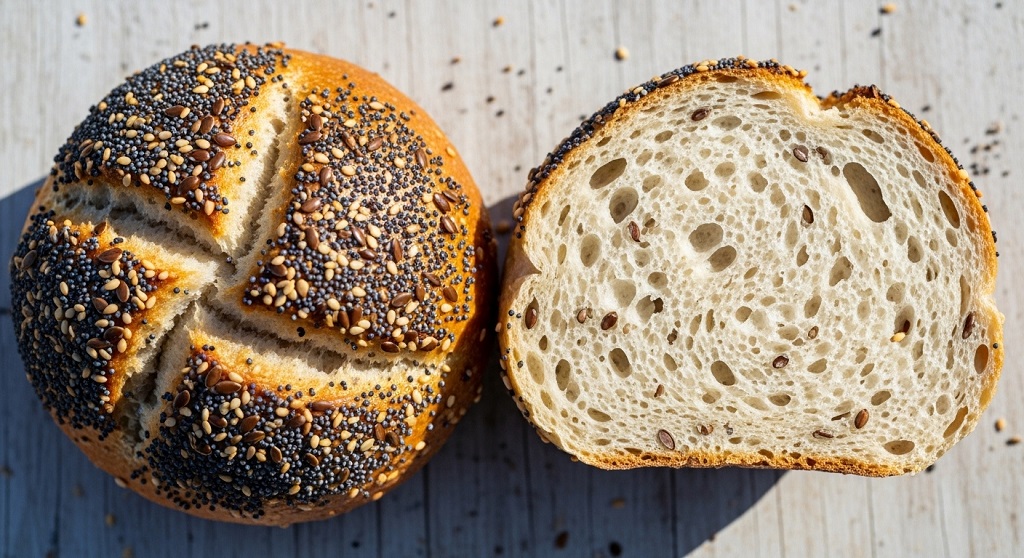
Common seed choices include sesame seeds, sunflower seeds, flaxseeds, chia seeds, and pumpkin seeds.
How Do You Make Soft and Fluffy Homemade Seeded Rolls Step by Step?
Short answer: Mix ingredients, knead dough, proof twice, shape rolls, add seeds, and bake until golden.
Step 1: Activate the Yeast
Combine warm milk with sugar and yeast. Let it sit for 5–10 minutes until foamy.
This confirms yeast activity and prevents failed dough rise.
Step 2: Mix the Dough
Add flour, salt, butter, and mixed seeds. Mix until dough forms.
Step 3: Knead Properly
Knead for 8–10 minutes until smooth and elastic.
Proper kneading aligns gluten strands and traps fermentation gases.
Step 4: First Proofing
Cover dough and let it rise for 60–90 minutes.
Dough should double in size.
Step 5: Shape Rolls
Divide dough into equal portions and shape into balls.
Step 6: Add Seeds on Top
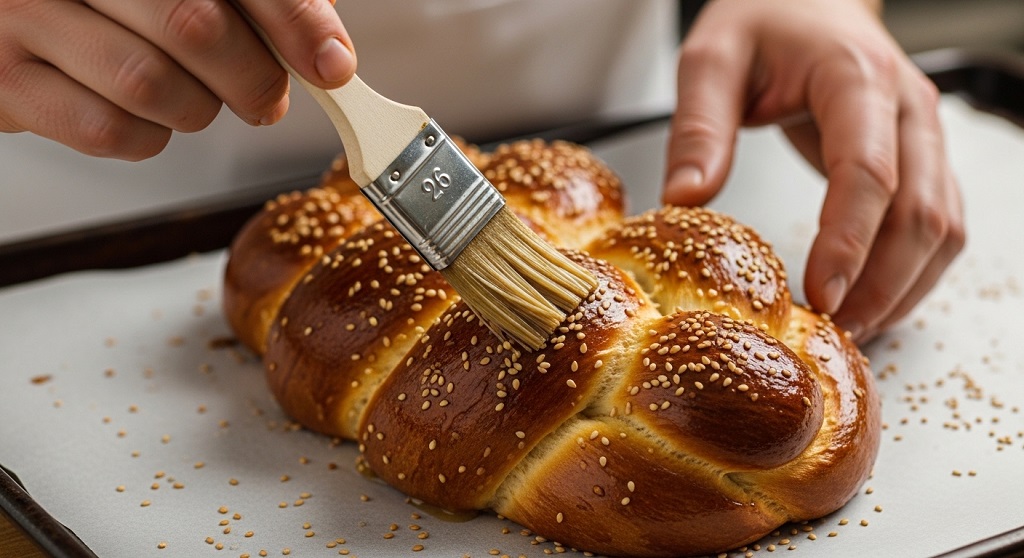
Brush with milk or egg wash. Sprinkle sesame or mixed seeds.
Step 7: Second Proofing
Rest shaped rolls for 30 minutes.
Step 8: Bake the Rolls
Bake at 180°C (350°F) for 18–22 minutes.
Rolls should turn golden brown with soft interiors.
Which Seeds Work Best in Homemade Seeded Rolls?
Short answer: Sesame, flax, sunflower, pumpkin, and chia seeds create the best texture and nutrition balance.
Each seed contributes a different benefit.
- Sesame seeds add nutty flavor
- Flaxseeds improve fiber content
- Sunflower seeds increase protein
- Pumpkin seeds add crunch
- Chia seeds help moisture retention
According to USDA nutrition data, flaxseeds contain about 27g fiber per 100g. Adding small amounts improves digestive value of bread rolls.
How Long Should You Knead Dough for Perfect Seeded Rolls?
Short answer: Knead dough for 8–12 minutes until smooth and elastic.
Under-kneading creates dense rolls. Over-kneading makes dough stiff.
You can test readiness using the windowpane method. Stretch a small piece of dough. If light passes through without tearing, gluten development is complete.
Why Do Seeded Rolls Sometimes Turn Dense Instead of Soft?
Short answer: Dense rolls usually result from inactive yeast, low hydration, or insufficient proofing time.
Common mistakes include:
- Using cold liquid with yeast
- Skipping second proofing
- Adding too many seeds
- Using too much flour
Home baking trials reported by King Arthur Baking show that over-flouring reduces roll softness by limiting dough expansion.
Can You Make Homemade Seeded Rolls Without Milk?
Short answer: Yes, water or plant-based milk can replace dairy milk.
Many bakers prefer dairy-free seeded rolls. Replace milk with:
- Almond milk
- Soy milk
- Oat milk
- Warm water
Plant-based liquids still produce soft rolls if hydration levels remain balanced.
How Healthy Are Homemade Seeded Rolls Compared to Store-Bought Rolls?
Short answer: Homemade seeded rolls contain fewer preservatives and more fiber than most packaged bread rolls.
A comparison study by the UK Food Standards Agency found packaged white rolls often contain added emulsifiers and stabilizers.
Homemade seeded rolls offer:
- Higher fiber content
- Lower sodium control
- No artificial preservatives
- Customizable ingredients
Adding seeds increases omega-3 fatty acids and plant protein.
How Do You Store Homemade Seeded Rolls to Keep Them Fresh?
Short answer: Store seeded rolls in airtight containers at room temperature for two days or freeze for longer storage.
Storage tips:
- Cool rolls completely before storing
- Use airtight containers
- Avoid refrigeration
- Freeze for up to one month
Freezing preserves texture better than refrigeration.
Can Homemade Seeded Rolls Be Made Ahead for Meal Prep?
Short answer: Yes, seeded rolls can be prepared ahead and frozen after baking.
Meal prep strategy:
- Bake rolls fully
- Cool completely
- Freeze individually
- Reheat when needed
This method saves time during busy weekdays.
What Baking Temperature Produces the Softest Seeded Rolls?
Short answer: Bake seeded rolls at 180°C (350°F) for balanced crust and soft crumb.
Higher temperatures create hard crusts. Lower temperatures reduce rise.
Professional baking tests show 175–185°C produces optimal softness for enriched rolls.
Conclusion: Why Should You Start Making Homemade Seeded Rolls Today?
Soft and fluffy homemade seeded rolls are simple to prepare and highly adaptable. You control ingredients, texture, and nutrition while avoiding unnecessary additives found in packaged bread.
By following proper kneading, proofing, and baking techniques, anyone can produce bakery-style seeded rolls at home. The process is reliable and repeatable once you understand dough structure basics.
Start with one batch this week. Experiment with seed combinations. Adjust hydration levels. Build confidence with each attempt.
If you enjoy practical homemade bread recipes like this, save this guide, share it with other home bakers, and try baking your first batch of homemade seeded rolls today.
Frequently Asked Questions About Homemade Seeded Rolls
Can I use whole wheat flour instead of white flour?
Yes. Replace up to 50% of white flour with whole wheat flour for better nutrition while maintaining softness.
Which yeast works best for seeded rolls?
Instant yeast works fastest. Active dry yeast also works but requires activation in warm liquid first.
How do I make seeded rolls vegan?
Replace butter with vegetable oil and milk with plant-based alternatives like oat or soy milk.
Why are my rolls not rising properly?
This usually happens because yeast is expired, liquids are too hot, or proofing time is too short.
Can I add oats to seeded rolls?
Yes. Rolled oats improve texture and increase fiber content. Add them during mixing.
How many calories are in seeded rolls?
One medium seeded roll contains approximately 150–200 calories depending on seed type and butter quantity.
Read More How to Make Sourdough Bread at Home Easily
Discover More How Many Days Can a Betta Fish Stay Without Food